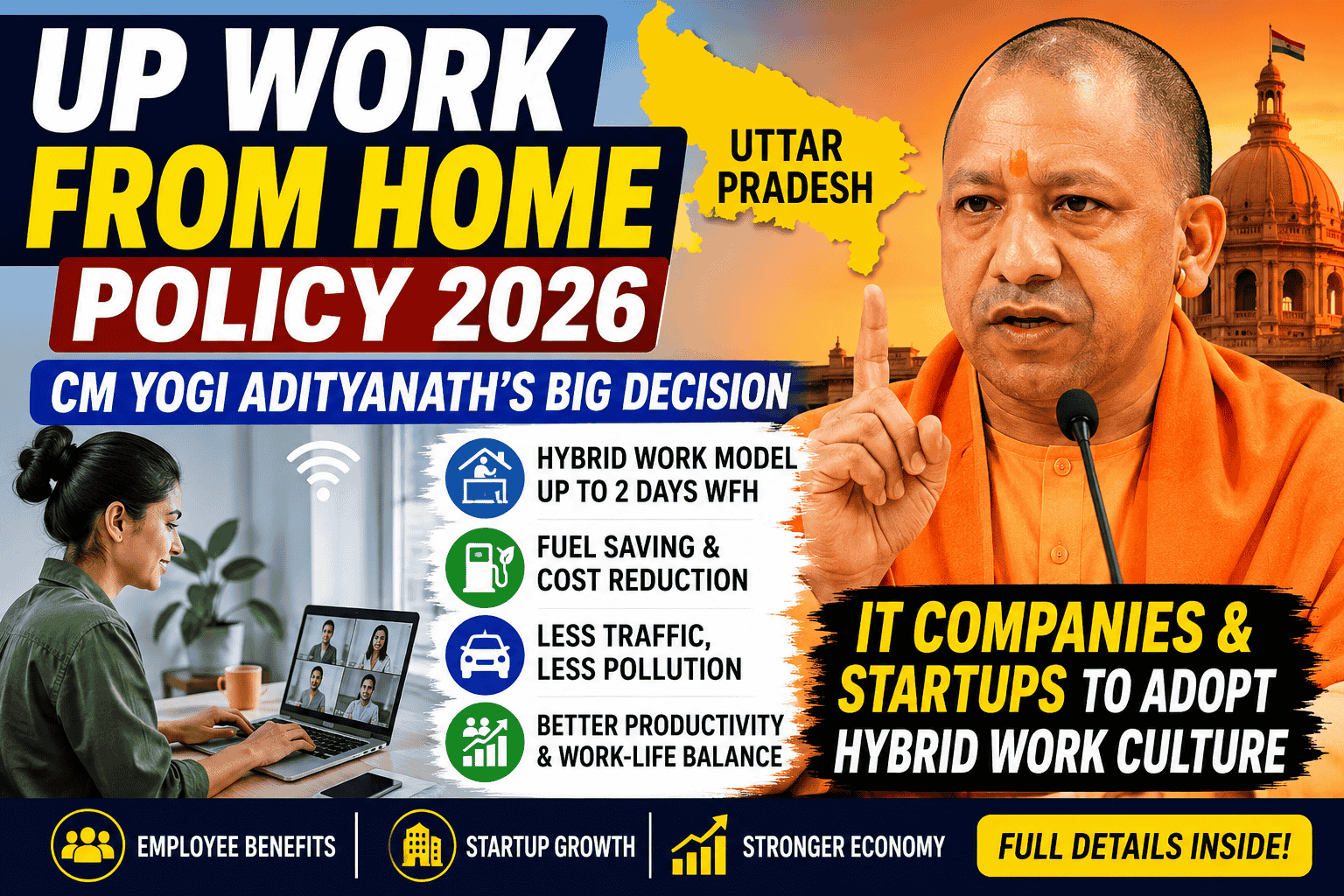

UP Work From Home Policy 2026
Uttar Pradesh Chief Minister Yogi Adityanath has introduced a major policy direction that could significantly change workplace culture in the state. The government has advised large industrial institutions, IT companies, startups, and organizations with large employee bases to adopt a hybrid work culture, including work-from-home arrangements for up to two days a week.
The move comes at a time when governments across India are looking for ways to reduce fuel consumption, traffic congestion, pollution, and unnecessary operational costs amid changing global economic conditions. The advisory also aligns with Prime Minister Narendra Modi’s recent appeal encouraging citizens and institutions to conserve resources and adopt efficient working models.
This latest development has sparked discussions among employees, startups, corporate leaders, and the IT sector regarding the future of remote work in India.
What Is Uttar Pradesh’s New Work From Home Policy?
According to reports, the Uttar Pradesh government has instructed the Industrial Development Department and concerned authorities to encourage:
- Hybrid work models
- Two-day work-from-home schedules
- Increased virtual meetings
- Reduced fuel consumption
- Greater use of public transport
- Car pooling and electric vehicles
- Flexible office timings
The government particularly wants large organizations, IT companies, and startups to consider remote work arrangements where possible.
The initiative is not a mandatory law at this stage but rather an advisory-driven approach aimed at encouraging sustainable workplace practices.
Why Is UP Government Promoting Work From Home?
The Uttar Pradesh government’s push for hybrid work culture is linked to several practical concerns.
1. Reducing Traffic Congestion
Cities like Noida, Lucknow, Ghaziabad, and Kanpur experience heavy traffic during peak office hours. By allowing employees to work remotely two days a week, authorities expect road congestion to reduce significantly.
Less traffic can result in:
- Faster travel times
- Lower fuel consumption
- Reduced stress for employees
- Better urban mobility
2. Fuel Conservation
The government is placing major emphasis on reducing fuel consumption due to global economic uncertainties and rising energy concerns.
Remote work can help thousands of employees avoid daily commuting, leading to substantial fuel savings over time.
3. Pollution Control
Vehicular emissions are one of the major contributors to urban pollution. Fewer office commutes can help improve air quality in major cities.
Experts believe that hybrid work models can contribute positively toward environmental sustainability.
4. Better Work-Life Balance
Work-from-home arrangements became highly popular during the COVID-19 pandemic, especially in the IT and startup sectors.
Many employees reported benefits such as:
- More family time
- Reduced commuting stress
- Increased flexibility
- Better productivity in focused tasks
Research studies on hybrid work models also suggest that employee satisfaction improves when companies provide flexibility.
Which Sectors Will Benefit Most?
The advisory mainly targets sectors where remote work is practical.
IT Companies
Software firms, app development agencies, digital marketing companies, SaaS businesses, and tech firms can easily adopt hybrid work structures.
Most IT companies already use:
- Cloud collaboration tools
- Video conferencing
- Remote project management systems
- Virtual communication platforms
Startups
Many startups operate with lean teams and digital-first business models. Hybrid work can reduce office costs while allowing startups to hire talent from multiple cities.
This may especially benefit:
- AI startups
- EdTech companies
- FinTech startups
- Gaming companies
- Media startups
- Digital agencies
Corporate Offices
Large organizations with administrative and desk-based roles may also benefit from flexible office policies.
However, sectors like manufacturing, logistics, healthcare, and retail may still require significant physical presence.
CM Yogi’s Other Key Instructions
Apart from work-from-home recommendations, the Uttar Pradesh government has also proposed several additional measures.
Virtual Meetings
Government departments have been advised to conduct a large portion of meetings online wherever possible.
This includes:
- Seminars
- Workshops
- Internal meetings
- Conferences
Reduced Vehicle Usage
The Chief Minister reportedly instructed immediate reductions in unnecessary official vehicles and convoys.
Officials and public representatives were encouraged to use public transportation at least once a week.
No Vehicle Day
The government is also considering promoting “No Vehicle Day” initiatives to create awareness about fuel conservation and environmental sustainability.
Flexible Office Timings
Authorities are exploring staggered office timings to reduce traffic pressure during peak hours.
This could help major cities manage daily traffic more efficiently.
Impact on Employees
For employees, especially in the tech sector, the policy could bring major advantages.
| Benefit | Impact on Employees |
| Reduced Travel | Saves time and fuel costs |
| Flexible Work | Better work-life balance |
| Lower Stress | Reduced traffic frustration |
| Productivity | Focused remote working environment |
| Financial Savings | Less spending on travel and food |
Many employees in metropolitan regions already prefer hybrid work models over fully office-based schedules.
Impact on Companies and Startups
Companies adopting hybrid work models may also see operational benefits.
Cost Reduction
Organizations can reduce:
- Office maintenance costs
- Electricity expenses
- Infrastructure spending
- Transportation reimbursements
Access to Wider Talent Pool
Remote hiring allows companies to recruit professionals from different cities and states.
This is especially useful for startups competing for skilled developers, designers, and digital professionals.
Improved Employee Retention
Flexible work culture has become an important factor in employee satisfaction and retention.
Studies show that modern professionals increasingly prefer companies offering hybrid flexibility.
Challenges of Work From Home
Despite its benefits, hybrid work models also come with challenges.
Communication Issues
Remote teams may face coordination and communication gaps if systems are not properly managed.
Monitoring Productivity
Some organizations struggle to track productivity and accountability in remote setups.
Cybersecurity Risks
Remote work increases dependency on digital infrastructure, creating cybersecurity concerns.
Companies may need:
- VPN systems
- Secure cloud platforms
- Data protection tools
- Employee cybersecurity training
Will Work From Home Become Permanent in UP?
Currently, the Uttar Pradesh government’s move appears to be advisory-based rather than legally binding.
However, if companies experience positive outcomes such as reduced costs, better productivity, and improved employee satisfaction, hybrid work may become a long-term workplace trend in the state.
The IT sector in cities like Noida already has strong infrastructure for remote and hybrid operations.
Expert View on Hybrid Work Culture
Several workplace experts believe that hybrid work is becoming the future of the global workforce.
Research on post-pandemic workplace culture suggests that flexibility improves employee engagement while helping organizations optimize operational costs.
Many companies now prefer hybrid work instead of completely remote or fully office-based systems.
How This Decision Could Change UP’s Startup Ecosystem
The policy may help Uttar Pradesh become more attractive for:
- Tech startups
- SaaS businesses
- Digital entrepreneurs
- Remote-first companies
Cities like Noida are already emerging as major technology hubs.
A supportive hybrid-work ecosystem could encourage more startups to establish operations in Uttar Pradesh.
TimesTVNews Analysis
At TimesTVNews, we believe Uttar Pradesh’s hybrid work initiative reflects a broader shift toward modern workplace flexibility and resource efficiency.
If implemented effectively, the policy could:
- Improve urban traffic management
- Support sustainable development
- Increase employee satisfaction
- Strengthen startup growth
- Promote digital workplace adoption
The coming months will reveal how companies respond to the government’s advisory and whether other states adopt similar work-from-home strategies.
For more latest business, startup, technology, and government policy updates, visit TimesTVNews Business Section regularly.
FAQs
What is UP’s new Work From Home policy?
The Uttar Pradesh government has advised large organizations, IT companies, and startups to adopt hybrid work culture with up to two work-from-home days weekly.
Is Work From Home mandatory in Uttar Pradesh?
No, the current policy is advisory-based and not legally mandatory.
Which companies will benefit most?
IT firms, startups, software companies, and digital businesses are expected to benefit the most.
Why is the government promoting hybrid work?
The main goals are reducing traffic, fuel consumption, pollution, and improving workplace flexibility.
Which cities may see the biggest impact?
Noida, Lucknow, Ghaziabad, and Kanpur could see major impact due to large office populations and traffic congestion.


 By
By



 By
By