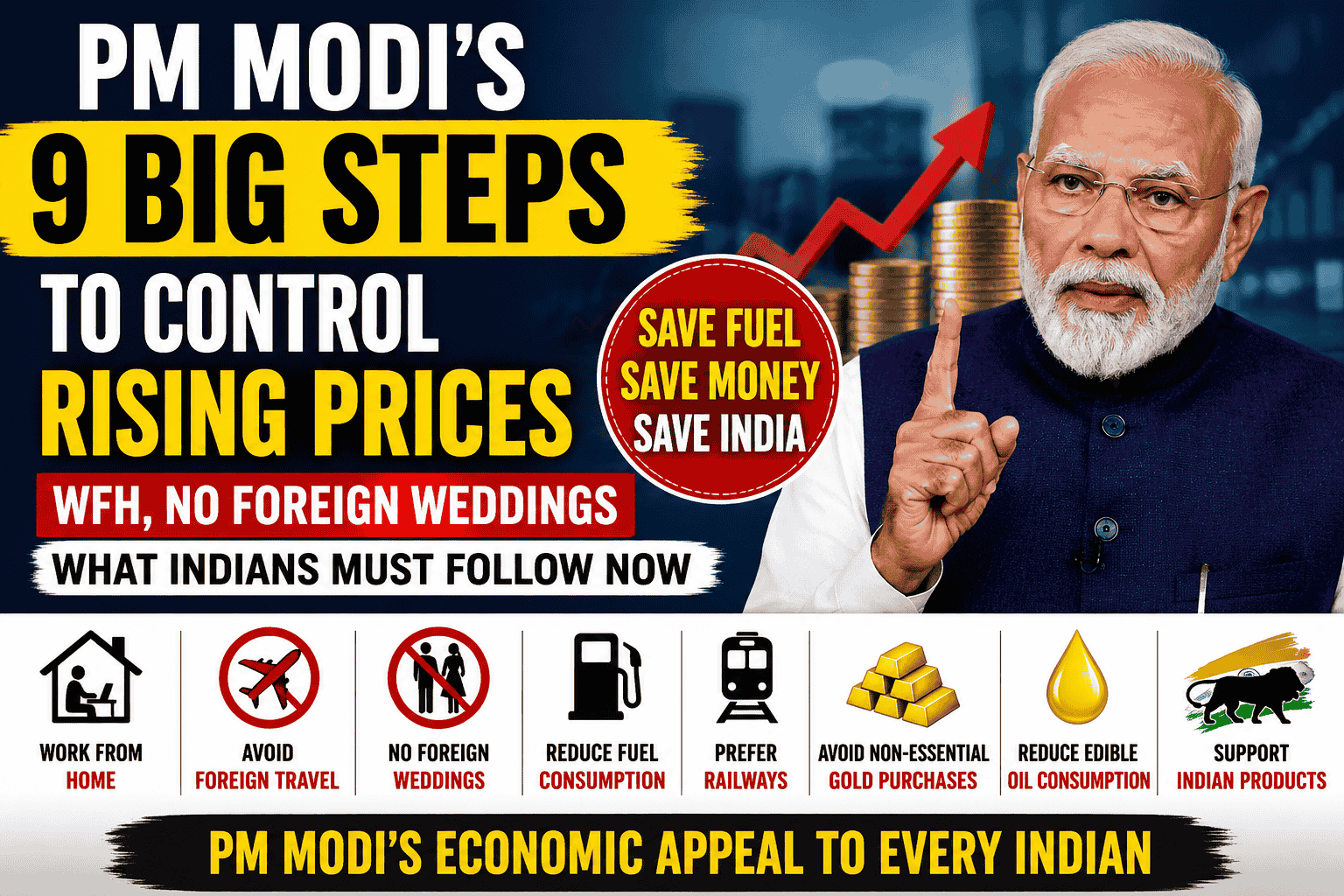

As global tensions continue to impact fuel prices, supply chains, and the Indian economy, Prime Minister Narendra Modi has urged citizens to adopt “Covid-era responsible habits” to help the country tackle inflation and economic uncertainty. During an address in Hyderabad, PM Modi appealed to Indians to reduce unnecessary expenses, conserve fuel, and support domestic economic stability amid the ongoing West Asia crisis and rising crude oil prices.
The Prime Minister’s message quickly became one of the most discussed topics across India because it directly affects the daily lives of middle-class families, businesses, travelers, and consumers. From work-from-home culture to avoiding foreign weddings and reducing gold purchases, the government’s suggestions are aimed at protecting India’s economy during a period of global instability.
Why PM Modi Is Asking Indians To Change Their Habits
The ongoing tensions in the Middle East have affected global oil supply chains and increased the risk of higher fuel prices worldwide. India imports a large portion of its crude oil requirements, which means international conflicts can directly increase petrol, diesel, transport, and food costs within the country.
According to PM Modi, citizens can help reduce pressure on India’s foreign exchange reserves and economy by making small but meaningful lifestyle changes. He described responsible living as a new form of patriotism during difficult global conditions.
PM Modi’s 9 Big Suggestions To Indians
1. Work From Home Wherever Possible
One of the biggest talking points from the speech was PM Modi’s recommendation to revive work-from-home practices similar to the Covid-19 period. He encouraged companies and professionals to hold virtual meetings and online conferences whenever possible to reduce fuel consumption and travel costs.
WFH can help:
- Reduce petrol and diesel usage
- Lower traffic congestion
- Cut office commuting expenses
- Improve fuel conservation nationally
Many experts believe hybrid work culture could return in sectors like IT, digital marketing, customer support, and corporate services if fuel prices continue to rise globally.
2. Avoid Non-Essential Foreign Travel
PM Modi appealed to citizens to reduce overseas travel, especially luxury vacations and unnecessary foreign trips. The main goal is to save foreign exchange reserves and encourage domestic tourism within India.
This suggestion comes at a time when:
- International airfares are increasing
- Crude oil prices remain volatile
- Currency pressure affects import costs
The government believes spending within India can strengthen the local economy while reducing financial pressure caused by global uncertainty.
3. Say No To Expensive Foreign Weddings
The Prime Minister also requested wealthy families to avoid organizing destination weddings abroad. In recent years, many Indians have spent massive amounts on luxury weddings in countries like Dubai, Thailand, Turkey, and Europe.
According to the government’s viewpoint, such spending leads to heavy foreign exchange outflow during a sensitive economic period.
Instead, PM Modi encouraged citizens to support Indian tourism and hospitality industries by hosting events domestically.
4. Reduce Petrol And Diesel Consumption
Fuel conservation was one of the central themes of PM Modi’s speech. He urged citizens to:
- Use metro trains
- Prefer public transport
- Choose carpooling
- Reduce unnecessary vehicle use
With global crude oil prices becoming unpredictable due to geopolitical tensions, reducing fuel demand can help stabilize economic pressure on India.
5. Promote Electric Vehicles
The Prime Minister encouraged Indians to shift towards electric vehicles (EVs) wherever possible. Electric mobility is being seen as a long-term solution to reduce India’s dependence on imported fuel.
Benefits of EV adoption include:
- Lower fuel costs
- Reduced pollution
- Less dependence on imported oil
- Better long-term sustainability
India has already witnessed rapid growth in electric scooters, electric cars, and charging infrastructure over the last few years.
6. Prefer Railways For Transporting Goods
PM Modi suggested businesses and industries use railways more frequently for transportation of goods instead of relying heavily on trucks and diesel-based logistics.
Railways can:
- Reduce fuel consumption
- Lower transportation costs
- Improve logistics efficiency
- Reduce highway congestion
This move aligns with India’s broader push toward sustainable infrastructure and efficient freight transport.
7. Avoid Non-Essential Gold Purchases
Another major statement from the Prime Minister was his appeal to avoid unnecessary gold purchases for one year. Gold imports significantly affect India’s foreign exchange reserves because the country imports most of its gold from abroad.
During uncertain economic times:
- Gold prices usually rise
- Imports increase trade pressure
- Currency reserves face stress
The government wants citizens to focus on responsible spending rather than luxury purchases.
8. Reduce Edible Oil Consumption
PM Modi also advised families to reduce edible oil consumption. While this suggestion was partly linked to economic concerns, he also highlighted the health benefits of balanced oil consumption.
India imports a large quantity of edible oils annually, making global price fluctuations a direct concern for Indian households.
Reducing unnecessary consumption can:
- Improve health
- Reduce import dependency
- Lower household expenses
9. Buy And Support Indian Products
Though not the primary headline, the speech strongly promoted the idea of supporting Indian-made products and reducing unnecessary imports.
This connects with the broader “Atmanirbhar Bharat” vision focused on:
- Domestic manufacturing
- Local businesses
- Economic self-reliance
- Job creation in India
Opposition Reactions To PM Modi’s Appeal
The Prime Minister’s statements also triggered political reactions. Opposition leaders criticized the government and questioned whether these suggestions reflected economic pressure within the country.
However, supporters of the government argue that these measures are precautionary steps aimed at protecting India from larger global economic shocks caused by war, oil supply disruptions, and rising inflation worldwide.
How Rising Global Tensions Affect India
The current West Asia crisis and global oil market instability have created fears of:
- Higher petrol prices
- Rising transportation costs
- Inflation in food and essential goods
- Pressure on imports and exports
India, being one of the world’s largest energy importers, remains vulnerable to sudden spikes in global crude oil prices. That is why the government is promoting conservation and responsible spending habits.
Can These Measures Really Help India?
Economic experts believe that collective public participation can reduce pressure during periods of international crisis. While individual changes may appear small, large-scale behavioral shifts across millions of citizens can help:
- Reduce fuel demand
- Save foreign exchange
- Stabilize inflation
- Strengthen domestic industries
The success of such measures depends largely on public cooperation and long-term awareness.
Final Thoughts
PM Modi’s appeal marks one of the strongest public calls for economic discipline since the Covid-19 pandemic. From work-from-home culture to avoiding luxury imports and conserving fuel, the government is preparing citizens for possible global economic turbulence ahead.
Whether these suggestions become temporary precautions or long-term habits remains to be seen. However, the message is clear — responsible spending, energy conservation, and support for the domestic economy are now being presented as national priorities during uncertain global conditions.
For more latest political, economic, and trending India news updates, visit Times TV News.

 By
By


 By
By