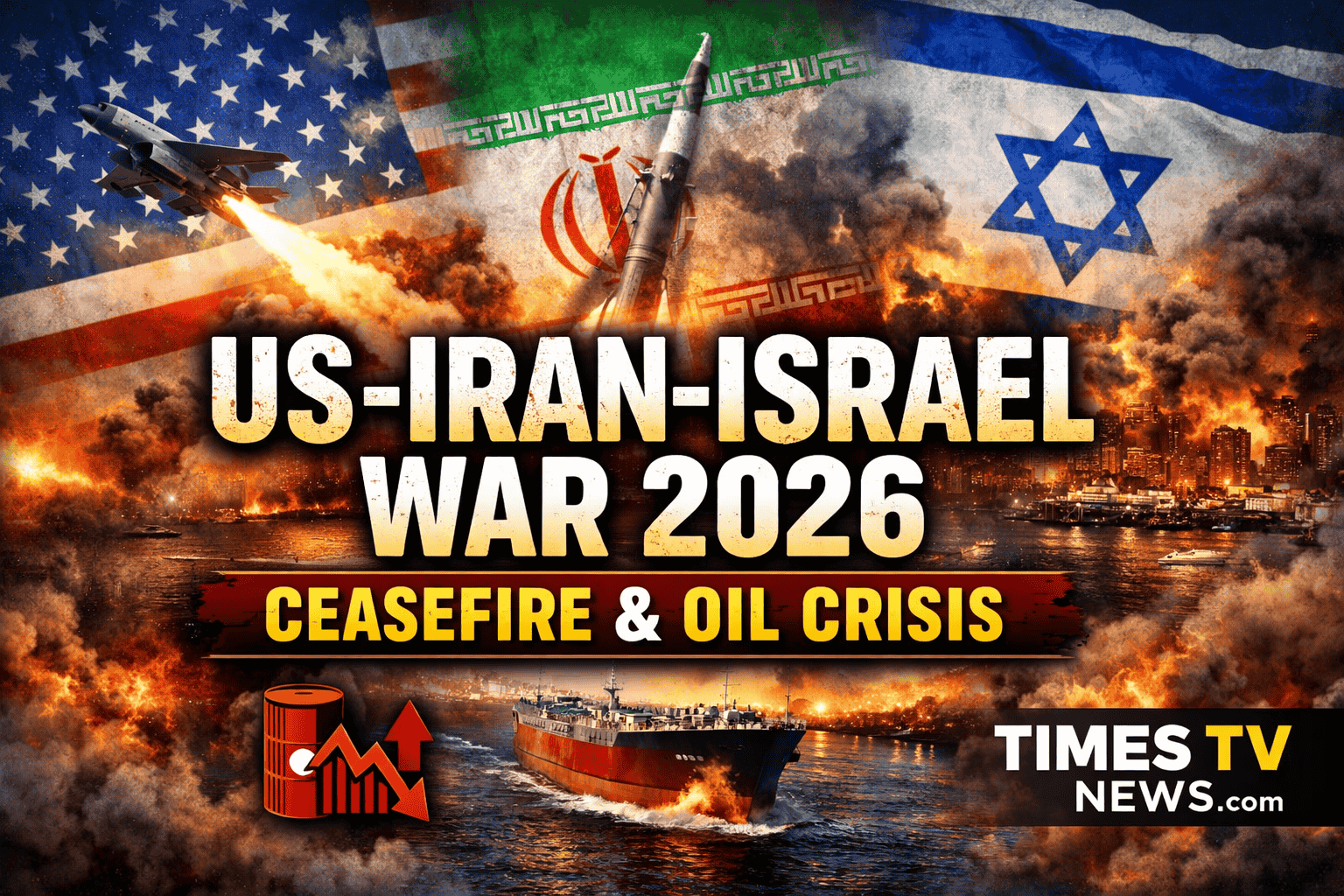

The ongoing Middle East crisis involving the United States, Iran, and Israel has entered a critical phase in April 2026, with a fragile ceasefire bringing temporary relief to global markets and geopolitical tensions. However, experts warn that the situation remains volatile, with the potential for renewed conflict at any moment.
As the world watches closely, the Strait of Hormuz—one of the most strategic oil routes on the planet—continues to be at the center of this geopolitical storm.
In this detailed report by timestvnews.com, we break down everything you need to know about the war, ceasefire, oil crisis, and what lies ahead.
What Triggered the 2026 Middle East War?
The conflict began escalating in late February 2026 after joint military actions by the United States and Israel against Iranian targets. In response, Iran launched missile and drone attacks targeting US bases, Israeli territories, and key Gulf infrastructure.
Soon after, Iran effectively blocked the Strait of Hormuz, halting global shipping traffic and triggering one of the biggest energy crises in modern history.
The situation quickly spiraled into a full-scale regional conflict involving multiple nations and proxy groups.
Why the Strait of Hormuz Matters So Much
The Strait of Hormuz is one of the most critical chokepoints in the global economy.
- Around 20% of the world’s oil supply passes through this narrow waterway
- It connects the Persian Gulf to international markets
- Any disruption impacts fuel prices, inflation, and global trade
When Iran restricted access, tanker traffic dropped drastically—by over 90% in some cases—causing massive disruptions to energy supply chains worldwide.
This led to:
- Oil prices crossing $100+ per barrel
- Supply shortages in multiple countries
- Rising fuel and food prices globally
Global Oil Crisis: Worse Than Previous Energy Shocks?
According to global energy experts, the current crisis may be more severe than past oil shocks.
- Oil prices surged nearly 60–70% during the conflict
- The disruption has been described as the largest in oil market history
Beyond oil, the crisis has also impacted:
- Natural gas supply
- Fertilizer production
- Food supply chains
Economists warn that prolonged disruption could lead to global recession risks and inflation spikes.
The Ceasefire: Temporary Relief, Not a Solution
In a dramatic development, the United States and Iran agreed to a two-week conditional ceasefire in April 2026.
Key highlights of the ceasefire:
- Temporary reopening of the Strait of Hormuz
- Halt in US-Israel military strikes on Iran
- Diplomatic talks mediated by international actors
Oil markets reacted instantly, with prices dropping sharply after the announcement.
However, experts caution:
- The ceasefire is short-term and fragile
- Core issues like nuclear policy and sanctions remain unresolved
- Regional tensions, especially involving Israel and Hezbollah, continue
Shipping & Trade Still Disrupted
Even with the ceasefire in place, global supply chains are far from normal.
- Hundreds of ships remain stuck in the region
- Shipping companies are facing massive financial losses
- Full recovery may take 6–8 weeks or longer
This means:
- Delayed deliveries
- Higher transportation costs
- Continued uncertainty in global trade
Iran’s Strategy: Power Through Pressure
Iran has used the Strait of Hormuz as a strategic leverage point.
By controlling or restricting access, Iran can:
- Influence global oil prices
- Pressure Western economies
- Strengthen its geopolitical position
Experts believe Iran sees this not just as a military conflict, but as a long-term strategic and economic battle.
Role of the United States and Israel
The United States, under strong political pressure, aimed to:
- Reopen the Strait of Hormuz
- Protect global oil supply
- Counter Iran’s regional influence
Israel, meanwhile:
- Supported US actions
- Continued operations against Iran-backed groups like Hezbollah
Despite the ceasefire, Israel has indicated that its broader military objectives remain unchanged.
Rising Tensions Beyond Hormuz
The crisis is not limited to just one region.
Iran has also warned of expanding its influence over other strategic routes like the Bab el-Mandeb Strait—another key global shipping corridor.
If escalated, this could:
- Disrupt global trade even further
- Impact Europe, Asia, and Africa
- Trigger a wider international conflict
Public Reaction & Internal Pressure
Inside Iran, reactions to the ceasefire have been mixed.
Reports show:
- Protests and anti-US demonstrations
- Hardline groups opposing negotiations
- Internal divisions over future strategy
This internal pressure could affect how long the ceasefire holds.
What Happens Next?
The biggest question right now is: Will the ceasefire hold?
There are three possible scenarios:
1. Extended Peace Talks
If negotiations succeed, we could see:
- Long-term reopening of Hormuz
- Stabilization of oil markets
- Reduced global tensions
2. Return to Conflict
If talks fail:
- Military strikes could resume
- Oil prices could surge again
- Global markets may crash
3. Prolonged Uncertainty
The most likely scenario:
- Temporary peace with periodic escalations
- Continued economic instability
- Ongoing geopolitical tension
Impact on India and the World
Countries like India are closely watching the situation.
Why it matters:
- India imports a large portion of its oil
- Fuel price fluctuations impact inflation
- Trade disruptions affect economic growth
Globally, the crisis highlights how interconnected the world economy is—and how one region can impact everyone.
Final Thoughts
The US–Iran–Israel conflict in 2026 is not just a regional war—it’s a global economic and political crisis.
While the ceasefire offers temporary relief, the underlying tensions remain unresolved. The Strait of Hormuz continues to be the most critical flashpoint, with the power to influence oil prices, global trade, and geopolitical stability.
For now, the world waits and watches.
Stay Updated with Times TV News
For real-time updates, deep analysis, and breaking news on global events, visit timestvnews.com — your trusted source for unbiased and fast news coverage.

 By
By




 By
By